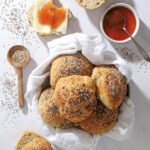
No-knead wholemeal rolls with cottage cheese - High-protein rolls
Recipe for cold-proved, no-knead wholemeal rolls with cottage cheese - delicious high-protein rolls.Makes 9-10.
Servings 10 rolls
Calories 236kcal
Ingredients
- 225 g cottage cheese - I use 1.5% fat
- 1 egg
- 12 g fresh yeast
- 250 ml cold water
- 2 tbsp oil
- 375 g plain flour
- 150 g wholemeal flour
- 12 g salt
- Sesame and poppy seeds
Instructions
Day 1
- Mix the dough directly in the container it will prove in - make sure it is big enough for the dough to rise. I use a 3-litre lidded plastic tub.
- Blend the egg and cottage cheese together in a mini chopper or similar. This step can easily be skipped - I only do it so my girls don't notice the cottage cheese;) The ingredients can also be mixed straight into the dough.
- Dissolve the yeast in the water and add the oil, egg and cottage cheese.
- Add the flour and salt, preferably in a couple of batches, and stir the dough well with a spoon.Make sure the flour is fully worked into the dough - if needed, wet your hand with a little water and help the dough along.If the dough seems too firm, you can add up to 50 ml extra water – add a little at a time. Different flours absorb liquid differently.
- Put the lid on and leave the dough to rise for about half an hour on the kitchen counter before placing it in the fridge overnight.
Day 2
- Take the dough out of the fridge and let it lose some of its chill while the oven heats up. The dough can stay in the tub.I use a baking steel for these rolls, which needs to heat up in the oven - alternatively, heat the baking tray in the oven.
- Dip a tablespoon in cold water, scoop up dollops of dough and place them on a sheet of baking paper. You should end up with 9-10 rolls per batch.If you have time, you can let the rolls prove for a further 20 minutes or so under a tea towel – but this is not a must.
- Sprinkle the tops of the dough with sesame and poppy seeds, and bake in a preheated conventional oven (top and bottom heat) at 230°C for about 18-20 minutes.
- Let the rolls cool slightly on a wire rack before serving, then store them in an airtight bag.The rolls can also be frozen.
Nutrition
Calories: 236kcal | Carbohydrates: 40g | Protein: 9g | Fat: 4g | Saturated Fat: 1g | Polyunsaturated Fat: 1g | Monounsaturated Fat: 2g | Trans Fat: 0.01g | Cholesterol: 17mg | Sodium: 565mg | Potassium: 127mg | Fiber: 3g | Sugar: 1g | Vitamin A: 34IU | Vitamin C: 0.001mg | Calcium: 28mg | Iron: 2mg