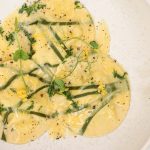
Langoustine ravioli with beurre blanc
Recipe for ravioli with a langoustine and ricotta filling, topped with beurre blanc.
Servings 4 servings
Ingredients
- 1 batch pasta dough - click here
Filling
- 150 g langoustines - cleaned weight (approx. 10)
- 100 g ricotta
- 2 tbsp lemon juice
- 1 bunch dill, finely chopped - approx. 3 tbsp
- Salt and pepper
Beurre blanc
- 200 g cold butter, cut into small cubes
- 200 ml white wine
- 2 tbsp white wine vinegar
- 1 shallot, finely chopped
- 5 peppercorns
- Optional: dill or parsley stalks, bay leaf or similar
To serve
- Finely grated lemon zest, to finish
- Finely chopped dill and pea shoots, if you like
Instructions
Filling
- Clean the langoustines, removing the shells, the intestinal tract and any impurities. You should end up with approx. 150 g raw langoustine meat.
- Roughly chop the langoustines and mix them with the ricotta, lemon juice and dill, then season with a little salt and pepper. Chill the mixture.
Ravioli and topping
- Run the dough through the pasta machine – start on the widest setting (10 on our machine) and gradually roll the dough thinner by adjusting the thickness setting on the machine. Dust the dough with a little pasta flour along the way if it sticks. Roll the dough until it is 2 mm thick, and dust the sheets with a little flour if needed.If you want a pattern in the pasta, lay the coloured linguine on the pasta sheet when it is approx. 3 mm thick. Go over it with a rolling pin before running it through the pasta machine at 2 mm.
- Place a large teaspoonful of filling at intervals on the pasta sheets, leaving enough space between them to cut out the ravioli.
- Brush the pasta with water right up to the edge of the filling, then lay a second pasta sheet over the filling. Press the pasta firmly together around the filling, making sure to push out as much air as possible.
- Cut out the ravioli in the shape you like.
- Place the finished ravioli on a plate dusted with flour so they don't stick together – the flour disappears during cooking.**At this point I usually finish the sauce, so it is ready when I start cooking the pasta. I reduce the "essence" itself before I even start making my ravioli – then it is ready to be warmed up and whisked with the butter once the ravioli are ready to go in the pot. Once the sauce is finished, it can happily sit over the lowest heat (1-2 out of 9 on my hob) – that keeps it warm until the dish is served.
- Bring a large pan of well-salted water to the boil, then cook the ravioli for approx. 3 minutes over medium heat – the water must not boil hard, or the ravioli will be thrown about. Lift the ravioli out with a slotted spoon and place them on a plate.
Beurre blanc
- Put the white wine, white wine vinegar, shallot, peppercorns and herbs in a saucepan and bring to the boil.
- Let it reduce over fairly high heat until about 50 ml remains, then strain the liquid through a fine-mesh sieve and pour it back into the pan. Discard the solids.
- Return the pan to the hob, let the liquid warm up, then turn down to low heat.
- Add the butter 1 cube at a time, whisking thoroughly until the cube has melted before adding the next. Keep going until all the butter is used and the sauce thickens. The sauce must be whisked constantly – that is how you get a rich, creamy beurre blanc. The sauce must NOT come to the boil at this stage, or it will split. On my hob I set it to 4 out of 9 – then nothing goes wrong.**Once the sauce is finished, it can be kept over the lowest heat (1-2 out of 9 on my hob) – so you can keep it warm while the rest of the dish is finished.
Serving
- Divide the cooked ravioli between 4 plates and carefully pour the sauce over – so it flows gently out across the plate.
- Sprinkle with finely chopped dill and grated lemon zest, and season with freshly ground pepper.